What Is A Disaster Recovery Plan?What Is A Disaster Recovery Plan?What Is A Disaster Recovery Plan?What Is A Disaster Recovery Plan?
  • SOLUTIONS
    • MegaMenu
      • Menu Desc
        Featured Solution AVM Cloud Fusion Compute Compute for Dedicated Host Compute for RDS Container Services Disk Connectivity Network & Security Co-Location Data Protection Analytics Managed Service License Subscription Marketplace

        Virtual Private Cloud

        Multi-tenancy based cloud with logical separated network and compute resources that allows isolated and customizable virtual network environments; able to leverage AVM Cloud’s solutions.

        AVM Cloud Fusion

        A hybrid cloud data protection solution which backs up and replicates your data and systems on-permises to AVM Cloud.

        Enterprise Private Cloud

        A private cloud solution provides a secure, dedicated environment with greater control, enhanced security, and customizable resources for a single organization.

        Sovereign Cloud

        Moving towards data sovereignty with AVM Cloud

        What Is A Disaster Recovery Plan?

        AVM Cloud Fusion

        A hybrid cloud data protection solution which backs up and replicates your data and systems on-permises to AVM Cloud.

        AVM Cloud Fusion 2.0

        AVM Cloud Fusion 2.0 combines hybrid cloud backup with advanced vulnerability scanning to safeguard your data and proactively strengthen your security posture.

        AVM Cloud Fusion Lite Edition

        A lightweight, cost-effective backup solution that offers essential data protection.

        STD : vCPU/vRAM

        Compute resources consists of CPU and RAM. These resources allows the execution of applications in a cloud environment.

        HI-MEMORY: vCPU/vRAM

        High memory ratio compute resources to cater for memory intensive workloads.

        STD DR : vCPU/vRAM

        vCPU & vRAM resources can also be purchased for Disaster Recovery to protect against site failure.

        Dedicated Host

        A multi-tenancy based cloud with dedicated resources, able to enjoy the benefits of public cloud without noises from neighbours.

        Database Licenses & Compute Resources

        Two distinct types of databases are offered: MS SQL and Postgre SQL, each providing a range of alternatives concerning the computational resources essential for the database.

        AVM Container Orchestrator (ACO)

        Mandatory Kubernetes Starter pack which consists of setup cost which includes a NSX edge, load balancer, a jump host and one public IP required to access the cluster.

        Storage Tier 0/1/2 Disk

        AVM Cloud offers 3 different tiers of storage.

        AVM S3

        Object Storage is a storage which manipulates and manages data storage as granular units known as objects.

        Storage Tier Disk with Storage Replication

        Connectivity options are available for customers who subscribe to DR services, commonly used to transfer data between the primary and secondary data centers

        NFS Disk

        For applications which need to share the same data as different applications and have the shared storage de-coupled from the server, customers can subscribe to NFS services.

        Dedicated Port Gateway

        For co-location customers who want their devices in the datacentre to be connected to other devices or networks, customers need to subscribe to this service to enable the physical connectivity between devices.

        Cable Extension Services

        For co-location customers aiming to establish connections between their datacenter devices and external networks must opt for this service.

        DDOS Protection

        For customers who subscribed to a dedicated link from the telco and require clean pipe to the internet with DDOS protection, the service is available from the price list.

        Internet Bandwidth

        For customers whose applications operate within the AVM Cloud, and demand access to the public internet—whether to provide external services or retrieve data from external networks into the AVM Cloud environment.

        Public IP

        For customers whose applications necessitate access to the public internet and a public routable IPv4 address, they have the option to specify the quantity of IP addresses required.

        Kiwisyslog Server

        Customers who need to monitor their devices, such as servers, switches, firewalls, and routers, AVM Cloud’s Syslog Server offers a simple solution for collecting and viewing to ease syslog messages analysis.

        SSL VPN

        For administrators and users to connect to their VPC remotely and securely, each VPC will need to subscribe to SSL VPN services that provide a VPN gateway from anywhere in the world to connect to the resources within their VPC securely.

        AVM V-LB

        It is part of the services from the software defined network within the virtualization layer. This add-on service is for the edge gateway to provide additional services for local load balancing.

        AVM WAF Service

        Web application firewall service that filters, monitors, and block malicious HTTP traffic to and from a web service.

        AVM CA

        AVM Cloud acts as the private trusted entity that is used to distribute Certificates that can be used to authenticate servers during communication.

        Content Delivery Network

        AVM Cloud subscribes to a CDN (Content Delivery Network) services that spans its’ coverage around the world with the capabilities to provide content locally to its’ users.

        Fortigate Firewall (Virtual)

        Fortigate Firewall is a next-generation firewall to protect customer’s infrastructure within AVM Cloud. The virtual edition firewall is presented as a first line of defense from the outside world. For added protection, customers can opt to have multiple firewalls to create segments within their infrastructure to increase the protection.

        NSX Edge for VPC Gateway

        This gateway service provides NAT, routing and networking services that connect networks within the VPC to networks outside of their VPC.

        AVM V-GSLB

        For customers that require load balancing of workload across multiple zones and even cloud service providers, customers can subscribe to this service.

        Deep Security & Agent-Based Anti-Malware

        AVM Cloud is an operator of PAAS which includes management of services up to the OS level, including managing the security of the OS from patching it to protect against vulnerability or malware.

        Full Rack or Partial Rack

        For customers who have their own physical equipment, for example Hardware Security Module, AVM Cloud provide co-location services.

        Smart Hand

        Tenants that have physical hardware in server co-location services who may need assistance in a break-fix scenario can subscribe to the Smart Hand service. Our data centre staff on-site can assist in receiving the RMA part, swap out the faulty part, and RMA the faulty part back to the vendor.

        L2 Link (Zone 1 and Zone 3)

        High bandwidth low latency network between Zone 1 and Zone 3 where customers that have workload on both zones can use this network for communication purposes.

        Snapshot Service

        Snapshot is a data protection feature that the external storage, at a point in time, will copy the data in the storage that can be recovered or restored in the event of any data corruption or deletion that affect the services.

        Replication Service

        For customers who wish to selectively nominate certain VMs to be replicated to the alternate data centre for data protection.

        Backup Capacity

        Customers can request for backup services for any VM that is provisioned in the cloud.

        AVM Insight Analytics

        For clients seeking a publicly accessible data collector, this service can be availed through the acquisition of the appropriate credentials.

        AVM Enforce Managed Firewall, WAF & LB

        Customers can subscribe to this service and offload their own IT personnel from the operation task of managing and monitoring firewall, load balancer and Web Application Firewall (WAF) in their AVM VPC subscription.

        AVM Enforce Technical Account Manager (TAM)

        This service encompasses direct engagement with AVM Cloud's TAM.

        AVM Smart Shuttle

        Efficient and reliable data transfer service to migrate a large amount of data through data transfer through a physical storage device. This eliminates the bottleneck caused by bandwidth availability.

        AVM Enforce Managed OS, Backup & DR

        With our Cloud Managed Backup Service, tenants in Malaysia can subscribe to it and offload their own IT personnel from the operation task of managing, monitoring OS, backup and DR of the VM in their AVM VPC subscription.

        AVM Enforce Managed Cyber Security

        Providing optimum cyber security service, customers also can request for Security Information and Event Management (SIEM) services for each of the security devices in their infrastructure.

        Server OS

        One of the benefits of moving workload into the cloud is to focus on your business and not on the complexity of IT.

        MS SQL Database

        Customers have the option of choosing enterprise edition, standard edition, web edition and express edition with different sizing in terms of the number of vCPU and vRAM available.

        2-Factor Authentication

        2-Factor Authentication (2FA) is for application developers to enhance authentication and authorization for their application.

        PAM & Session Monitoring

        The offered service incorporates a Session Monitoring feature, encompassing both Command Line Interface (CLI) and Graphic User Interface (GUI) modes.

        Remote Desktop

        AVM Cloud's Horizon DaaS RDSH (Remote Desktop Session Host) offers an entry-level solution enabling multiple users to simultaneously connect and utilize a single Windows Operating System, gaining access to applications in tandem.

        Virtual Desktop

        The AVM Virtual Desktop Services offers a solution that empowers organizations to adopt flexible work arrangements without relinquishing control over desktop management.

  • SECTORS
    • MegaMenu
      • Menu Desc
        Conglomerate Fast Food Chain Finance Services

        Conglomerate

        Into the world of diversification

        What Is A Disaster Recovery Plan?

        Fast Food Chain

        Bringing technology and the fast-food chain industry together

        What Is A Disaster Recovery Plan?

        Finance Services

        The future of financial services is now

        What Is A Disaster Recovery Plan?
  • RESOURCES
    • MegaMenu
      • Menu Desc
        Blog & News White Papers Digital Content Videos
        14/04/2026
        Cloud Resiliency
        14/04/2026
        Blog
        Categories
        • Blog

        Achieving Cloud Resiliency in 2026

         Achieving Cloud Resiliency in 2026     Managing cloud resiliency in 2026 requires a fundamental shift in how Malaysian enterprises view their digital foundations. We have moved […]
        13/05/2025
        13/05/2025
        Blog
        Categories
        • Blog

        Is Your Business Truly Protected? The Cybersecurity Lifecycle and the Ransomware Reality in Asia Pacific

        MORE LIKE THIS

        White Papers

        Discover and acquire knowledge how the cloud could solve your business obstacles and remain a step ahead

        What Is A Disaster Recovery Plan?

        Digital Content

        Browse through individual pages and catch a glimpse of the captivating content that awaits you

        What Is A Disaster Recovery Plan?

        Videos

        Explore AVM Cloud’s collection of engaging and informative videos

        What Is A Disaster Recovery Plan?
  • PARTNER
  • ABOUT
  • GET IN TOUCH
  • SOLUTIONS
  • SECTORS
    • CONGLOMERATE
    • FAST FOOD CHAIN
    • FINANCE SERVICES
  • RESOURCES
    • BLOG & NEWS
    • WHITE PAPERS
    • E-BOOKS
    • VIDEOS
  • PARTNER
  • ABOUT US
  • GET IN TOUCH
All Systems OperationalLogin
✕
How Do I Work From Home Securely?
30/10/2020
How Do I Work From Home Securely?
The 5 Biggest Internet Of Things (IoT) Trends In 2021 Everyone Must Get Ready For Now
26/11/2020

What Is A Disaster Recovery Plan?

13/11/2020
Categories
  • Blog
Tags
  • 2021
What Is A Disaster Recovery Plan?

Disasters come in all shapes and sizes, from a full site failure, to failure of something like a storage array. There may be a natural disaster where your data center is, or you may even have a malicious actor inside your environment seeking to harm your business.

Whatever the case, you need a plan, and all plans are not created equal. Then, once you have your plan, you need to test it and update it on a regular basis.

Create a disaster recovery plan for your business

Creating a disaster recovery plan for your business is essential to your business’ function. After all, how will things continue to work if a disaster occurs?

The first thing to do is to get an understanding of the applications and services in your IT environment. After you have this list, you must perform a business impact analysis, or BIA.

A BIA is an important step to determine how you will recover your applications, since as part of this you will determine what the recovery point objective (RPO) and recovery time objective (RTO) is for every application or service in your environment.

Define your RTO & RPO)

RTO: Maximum allowed time before the service is restored after failure.

RPO: Maximum allowed loss of historical data after a failure

For each application and service, you then must determine several important items:.

  • The components or servers that make up the application or service
  • Dependencies on other applications or services in your environment
  • How to restore each component to meet your RPO and RT
  • How to verify components have been restored correctly
  • How to protect the data in your disaster recovery site
  • How to fail back to production when the disaster is over, or how to make the DR site the permanent site

Throughout this disaster recovery process, there is something very important to remember, the human component. Recovering from a disaster is stressful! That’s why making sure you have a unified approach to each application is so important.

While RPOs, RTOs and restoration steps may differ for each application, it is important to follow the same processes for each.

It is also important to find a tool that will make the creation, testing and execution of your plan simple for your staff to perform.

Disaster recovery plan template

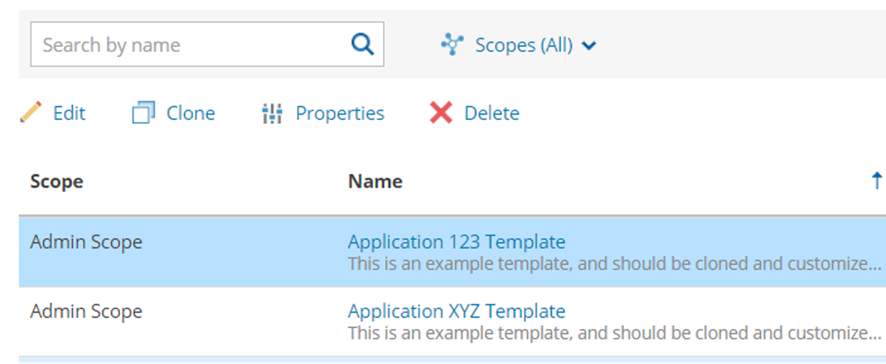
Perhaps one of the most important parts of your plan is your disaster recovery plan template. Unfortunately, this is often overlooked by most in the planning process.
What Is A Disaster Recovery Plan?
DRP template

Why is it so important? Simple. We are all human. During a disaster, tensions and emotions are running high. Having each disaster recovery plan look the same, and contain the same information is key to its success.

From a planning perspective, it is also much easier to have documentation with a unified look and feel, so key stakeholders can quickly review documentation and get an understanding of what is in each plan.

Let’s take a closer look at things to think about when creating a new disaster recovery plan.

What are the key steps of a disaster recovery plan?

If we boil a disaster recovery plan to just a few key steps it really comes down to bringing the application back online and making sure it works correctly.

Key steps for a successful disaster recovery:

  • Declaring the disaster
  • Beginning recovery of plan components
  • Testing plan components as they are recovered
  • Testing the application to ensure it is working correctly
  • Protecting the data in the DR location
  • Notifying application owners and key stakeholders as the plan progresses

Are there more things to think of for your DR plan? Of course, but if your plan cannot bring the failed application back online and make it work again, you have not successfully recovered. It’s just that simple.

Let’s take a closer look at what needs to be included in a DR plan to make this happen.

Defining Business Continuity (BC)

Business continuity is the ability of a business to sustain essential operations in case of unexpected disruptions or emergencies. These may include malware attacks, accidental deletion, power outages, and natural disasters.

What to include in a disaster recovery plan?

There is some information that each disaster recovery plan should contain, no matter what type of plan it is.

Here’s the most important information to include:

Validation and verification steps to ensure application is running correctly

  • Disaster recovery plan name
  • Name of application or system to be recovered
  • Name and contact information for application owner
  • RPO and RTO of application or system
  • Name of each server or component to be recovered
  • Steps to be taken on servers or components
  • Validation and verification steps to ensure application is running correctly

Let’s take a closer look at why these things are so important.

Each plan should have a distinct name so it’s easy to reference, this may be something as simple as “XYZ Application Disaster Recovery Plan.” It should also clearly list the application owner as well as their contact information.

The next important item is the plan’s RPO and RTO. This should be right at the beginning of the plan so whoever is doing the recovery knows how much time they must recover in.

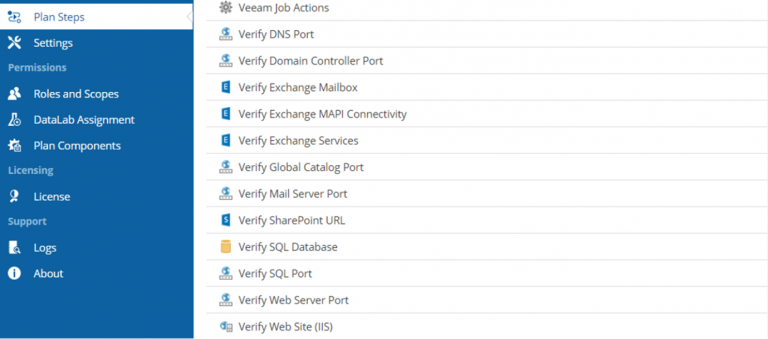
It should also list every asset in the plan, as well as the steps that must be taken to recover each of them. If there is a specific order that applications or components need to be recovered in, it should be listed. Likewise, if the applications recovered require any sort of verification or validation, these instructions should be included in the plan. If the application being recovered is complex, it’s also always nice to have an application topology diagram.
What Is A Disaster Recovery Plan?
DRP template

Recovery plan consideration

As you create recovery plans, there are several considerations to keep in mind.

First and foremost, your recovery plan needs to be easy to read and use! This means you should make sure your recovery plan is reviewed by others during the creation of the plan.

Besides checking things like spelling and grammar, it’s always good to have another set of eyes on the plan to make sure it flows correctly.

If you’re validating your application before you bring all components online, this could cause problems from both an audit perspective and for your application functioning properly.

It’s also a good idea to make sure someone who does not know that particular application reviews the disaster recovery plan, after all, who knows who may be executing the recovery.

Types of disaster recovery plans

Often, people think that there is just one disaster recovery plan they need to recover their whole business. This is not the case, and it is simply not practical. There are many types of plans, and ways to group them.

Think of the single document you would have to have to recover your business. It would be so large and so complex, that there would be almost no way to test it, or successfully execute it. Not to mention it would be nearly impossible to update when things change in an environment.

The truth is that most organizations have many types of business continuity and DR plans.

Here are a few examples:

  • Application-level failure
  • Site-level failure
  • Infrastructure component failure
  • Mission-critical applications
  • Dev/test applications

A plan needs to be much more granular and flexible, while sharing the same look and feel.

Recovering services at the application level make sense for several reasons. First and foremost, it allows the application owners to get involved in disaster recovery. After all, they know their applications the best and are aware of any nuances to their particular application, such as the order the servers need to be started in. They are also aware of any special requirements from an audit perspective.

A site-level plan simply lists the applications that would need to be recovered in the event of a site failure, as well as any other important information that may be applicable at the site level. Then the application-level plan can be easily used.

There may also be a plan at the component level for the recovery of a storage array in the event of a failure.

plan for disaster recovery in your environments, so you can respond to different types of disasters accordingly. While these plans should have the same look and feel, the steps taken for recovery may be different based on the type of failure.

Testing your disaster recovery plan

After creating a plan, the most important thing you can do is test it. Why? Simple. You need to know if the plan you put together works.

There is a tendency to not fully test disaster recovery plans, or not test them at all. At best, most organizations sort of test their DR plans once or twice a year.

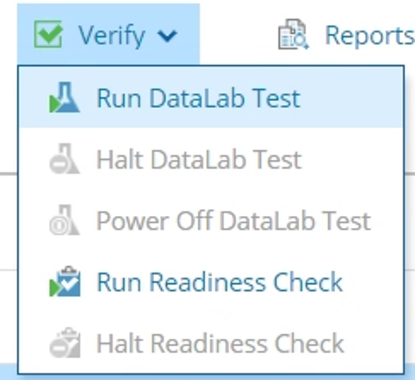
Continuous testing is important, especially since applications are constantly changing. Plans must be updated any time a change is made to an application, such as adding more server for additional capacity, or removing older servers.

The distinction between business continuity and disaster recovery can be summarised in the following table:
What Is A Disaster Recovery Plan?
How to run a DR test

When testing, be sure to pay special attention to what did not go as desired. This is the only way your disaster recovery plan will improve.

Sure, you can restore one server and call it a successful DR test, but has the test served its purpose?

The true purpose of a DR test is to find out if your plan works or not. Don’t cheat at your DR test or you may find yourself in an even worse spot in the event of an actual disaster.

How are organizations using a disaster recovery plan?

First and foremost, DR and business continuity plans are created to ensure your business will continue to run in the event of a disaster. While everyone hopes they will never have to execute a DR plan, it’s important that it’s ready and waiting to be executed at any time.

Besides protecting your business, disaster recovery planning is a big audit point. Regulated environments need to prove that they are ready for a disaster and capable of recovering, or face consequences. The disaster recovery plan is a very important asset when an auditor comes knocking.

We also can’t forget our disaster recovery tests. DR plans are used during DR tests to see if they actually work or not and must be revised and re-tested if they do not.

How to successfully plan for and recover from a disaster?)

When it comes to successful disaster recovery, there are several important things to focus on.

First and foremost is focusing on the creation of your disaster recovery plans. Be sure to use a template to make sure all your plans look and feel the same way for ease of use when it comes time to recover them. Be sure to clearly state the application’s RTO and RPO at the beginning of each plan so there is no confusion come recovery time.

Another equally important component of disaster recovery and business continuity is testing. Be sure to fully test your disaster recovery plans as often as possible, especially after there have been changes to the application or service the plan is based on. Be sure to pay attention to what doesn’t work during a disaster recovery test and fix it as soon as possible.

While we tend to focus on technology for disaster recovery, don’t forget about your people. Be sure to have a good understanding of who will be recovering an application should a disaster arise. This is one of the reasons it’s so important to have easy-to-follow disaster recovery plans. The person who wrote the plan may not be the person performing the disaster recovery.
What Is A Disaster Recovery Plan?
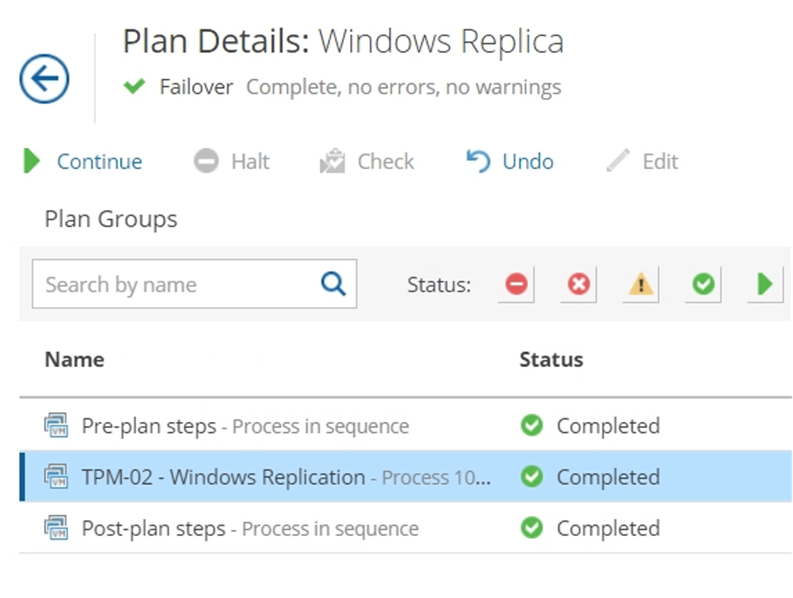
Successful Disaster Recovery plan

Finally, consider an automation and orchestration solution for your disaster recovery planning and testing.

AVM Cloud Fusion is a solution dedicated to solving business backup and disaster recovery challenges. Partnering with industry leader, Veeam, we are able to provide businesses a peace of mind when it comes to their IT challenges while they can focus on their business.

Contact AVM Cloud today at [email protected].

Credits to original author – Melissa Palmer, Veeam
Share

Related Posts

14/04/2026
Cloud Resiliency
14/04/2026
Blog
Categories
  • Blog

Achieving Cloud Resiliency in 2026

 Achieving Cloud Resiliency in 2026     Managing cloud resiliency in 2026 requires a fundamental shift in how Malaysian enterprises view their digital foundations. We have moved […]
Do you like it?
Read more
13/05/2025
13/05/2025
Blog
Categories
  • Blog

Is Your Business Truly Protected? The Cybersecurity Lifecycle and the Ransomware Reality in Asia Pacific

Do you like it?
Read more
24/01/2025
24/01/2025
Blog
Categories
  • Blog

Charting 2025: What to Expect from AVM Group Amidst the Private Cloud Renaissance

Do you like it?
Read more
Share

More news

Cloud Resiliency
14/04/2026

Achieving Cloud Resiliency in 2026


Read more
13/05/2025

Is Your Business Truly Protected? The Cybersecurity Lifecycle and the Ransomware Reality in Asia Pacific


Read more
24/01/2025

Charting 2025: What to Expect from AVM Group Amidst the Private Cloud Renaissance


Read more
What Is A Disaster Recovery Plan?

The leading cloud computing services provider in Malaysia

Step into an intelligent future. Get started today.

What Is A Disaster Recovery Plan?
[email protected]

©2026 AVM Cloud Sdn Bhd 200901032570 (875681-X)
All rights reserved.

  • Privacy Policy
  • ABC Policy
  • Whistleblowing Policy
SOLUTIONS
  • Compute
  • Compute for Dedicated Host
  • Compute for RDS
  • Container Services
  • Disk
  • Connectivity
  • Network & Security
  • Co-Location
  • Data Protection
  • AVM Insight Analytics
  • AVM Enforce Managed Service
  • License Subscription
  • Marketplace
  • Digital Workspace
FEATURED SOLUTIONS
  • Virtual Private Cloud
  • Dedicated Host
  • AVM Cloud Fusion
  • Cloud-in-a-Box
  • Sovereign Cloud
SECTORS
  • Conglomerate
  • Fast Food Chain
  • Finance Services

RESOURCES
  • Blog & News
  • E-Books
  • Videos
COMPANY
  • About
  • Get In Touch
  • Login
AVM Cloud. All rights reserved. Terms of use Privacy Policy